Key facts: Structural Drying near Frontier Village
- Rented homes made up 24.3 percent of occupied Lake Stevens units in the 2020 census.
- Frontier Village has been inside the city since the 2006 annexations.
- The city handles building, mechanical and plumbing permits online; electrical permits come from Washington L&I.
- Moisture left in one unit's wall can affect the unit next door.
Coordination
Setting up a job across more than one unit
- 1
Name one point of contact
Usually the manager or association. Everyone should know who is making decisions.
- 2
Find the source first
The leak may be two floors up, so start from where the water began.
- 3
Get access to all units
Arrange entry times with each household. This is often the slowest step.
- 4
Read each unit
Label readings by unit so each owner and insurer can see their own part.
- 5
Plan the equipment
Fit machines to the circuits available, and keep halls clear.
- 6
Monitor everywhere
Follow-up readings should cover all the affected units, not just the first one.
- 7
Release in order
Equipment should leave a unit only once its side of the shared assembly reads dry.
Small rooms
Equipment in small rooms
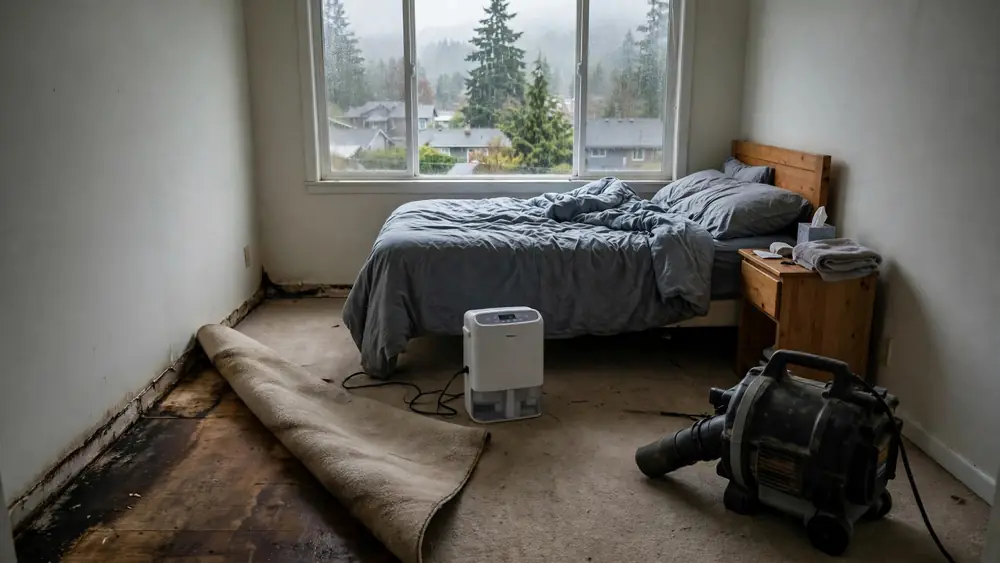
Apartments and townhomes tend to have small rooms, so a dehumidifier and a couple of air movers can dominate the space. Rooms can also heat up quickly, which helps drying up to a point but makes them unpleasant to live in. If the setup makes a room unusable, ask whether a different layout would help, or if the noisy part of the work can be arranged around your household's schedule.
Don't unplug or move anything without asking, because a machine switched off for a night slows down the job. Tell the contractor if a breaker trips. Older or smaller units might not have many separate circuits, so a contractor may need to bring power from another room. Keep cords away from doorways, and let them know if you have small children or pets.
- Ask about layout if a room is unusable
- Report tripped breakers
- Keep walkways clear
Renters
Renters and drying in Lake Stevens
Census figures from 2020 show about a quarter of occupied Lake Stevens units are rented, so this is a common situation here. If you rent, your landlord or manager generally decides how the building gets dried, and you should not authorize anyone to cut walls on your own. You can still ask reasonable questions. How long will the machines be here? Do I need to move things? What happens to my belongings?
Your belongings are usually your own responsibility, through a renter's policy if you have one. Photograph everything that got wet, and keep damaged items until you have spoken with your insurer. If running the equipment affects your power use, ask the manager how that will be handled. Put your questions in writing, as a text or email gives you a date to refer to.
Repairs
After the machines leave
Repairs in a shared building take longer than people expect. Walls that separate units may need to be rebuilt to keep their fire rating, and that work may need a permit from the city. Plumbing and mechanical work on shared lines may also need a permit, whereas electrical permits come from Washington Labor & Industries, the city notes. Do not let anyone close up a wall until all sides have been confirmed dry. If repairs are delayed, leave the wall open and keep humidity under control, as the EPA suggests, below 60 percent. [4]
Check who you are dealing with, too. An association may need proof of registration and insurance before a contractor can work on the property. Washington L&I's Verify tool shows you whether a registration is active, and whether there are any citations or bond lawsuits. [5]
FAQ
Drying questions from Frontier Village neighbors
Can I refuse drying equipment in my unit?
It is your home, but refusing can leave moisture in a shared wall and slow things down for your neighbors. Talk to the manager and the contractor about the noise or the layout. If you rent, check what your lease says about access for repairs.
Why are they testing my walls if I did not have a leak?
Water can move through floor framing and along shared walls without showing. Checking neighboring units is normal for a serious leak. A dry reading is good news, and it is also a useful record to keep.
Who decides when a shared wall is dry?
The contractor measures it, usually against dry materials nearby, and the owner or association approves the next step. Ask for readings on both sides. If you are uneasy about closing up a wall, ask to see the numbers first.
Will drying equipment trip breakers in my apartment?
It can, particularly on small or shared circuits. The contractor should plan around what is available. If a breaker trips, tell them instead of resetting it repeatedly, and do not plug other high-draw appliances into the same circuit.
Do repairs have to wait for every unit to dry?
Often they should for any shared wall or floor, as closing one side early can trap moisture. Finishes in rooms that are not affected can usually go ahead. Ask the manager how they plan to sequence this.